


Buying or selling property in India is more than just a financial transaction. It’s a legal transfer of ownership, and everything hinges on one document: the sale deed.
While the legal framework around property transfers hasn’t changed much over the years, how sale deeds are prepared and stamped certainly has. Physical stamp papers are gradually being replaced by digital alternatives, and today, e-stamping has become the preferred method in many states.
Check our comprehensive e-stamping process guide.
If you’re in the middle of a property transaction and want to understand how e-stamping a sale deed works, where it fits into the legal process, and what steps you need to follow, this guide breaks it down clearly.
What is a Sale Deed?
A sale deed is a legally binding document that confirms the transfer of ownership of an immovable property from the seller to the buyer. Once executed and registered, it acts as conclusive proof of ownership.
According to Indian law, a sale deed becomes valid only when:
- Adequate stamp duty is paid
- The document is executed by both parties
- It is registered with the Sub-Registrar of Assurances
Without these steps, the property transfer remains legally incomplete. This is why a registered sale deed is critical for any property transaction.
Legal Framework Governing Sale Deeds
Property transfers in India are governed primarily by:
- The Transfer of Property Act, 1882
- The Registration Act, 1908
- Relevant State Stamp Acts
The property transfer act defines a sale as a transfer of ownership in exchange for a price paid or promised. It also mandates that such a transfer must be documented and registered when it involves immovable property valued above Rs.100.
Stamp duty, which is a state subject, must be paid as per the applicable property transfer stamp duty rates notified by each state government.
What Does E-Stamping Mean?
Traditionally, stamp papers were physical sheets purchased from licensed vendors to pay the stamp duty, which is a tax levied on transfer of immovable property under the property transfer act in each state.
E-stamp sale deed refers to paying this stamp duty digitally. Rather than buying physical stamp paper, you generate an e-stamp certificate online on authorised portals. This certificate is legally valid and linked uniquely to your transaction.
Learn how to buy e-stamp for sale deeds through our Uttarakhand guide.
Why E-Stamping is the Better Option
There are quite a few reasons people now prefer to pay stamp duty electronically:
- The process is more secure and transparent than traditional franking or physical stamp papers.
- You receive a digitally signed certificate with a unique identification number.
- Verification of authenticity is easy via official portals.
- In many states, you can integrate e-stamp with your sale deed online preparation and registration.
And with digital reforms happening in India, including initiatives like Maharashtra’s new electronic bond system that lets you pay stamp duty online and receive e-stamp immediately, the process is becoming more convenient.
Why E-Stamping is Preferred Over Physical Stamp Papers
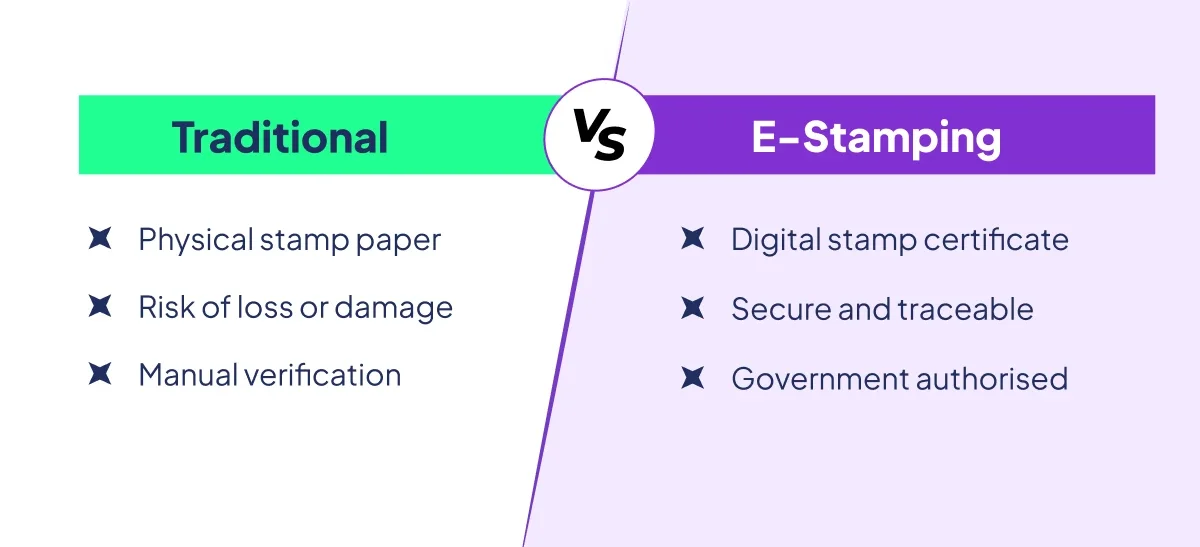
The shift towards e-stamping is not just about convenience. It addresses long-standing challenges associated with physical stamp papers.
Key Advantages of E-Stamp Sale Deed
- Eliminates risks of counterfeit or duplicate stamp papers
- Offers a unique identification number for verification
- Reduces dependency on local stamp vendors
- Provides a clear audit trail of stamp duty payment
- Enables faster preparation of sale deed online
Many states now actively encourage e-stamping as part of broader digitisation of land and property records.
Understanding Property Transfer Stamp Duty
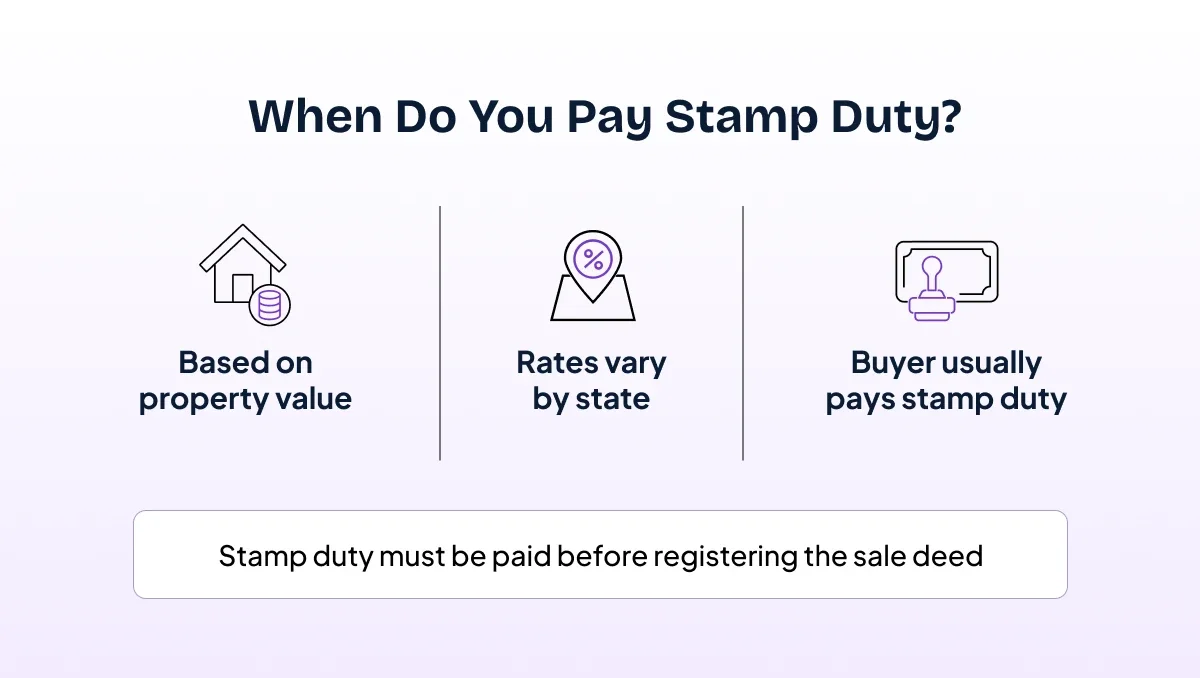
Stamp duty is a tax levied by the state government on property transactions. It is calculated as a percentage of:
- The transaction value, or
- The circle rate value, whichever is higher
Factors Affecting Stamp Duty
- Location of the property
- Type of property (residential or commercial)
- Ownership structure (individual or joint)
- Gender of buyer (some states offer concessions to women)
Stamp duty rates vary widely across states, usually ranging between 4 percent and 8 percent of the property value.
Stamp Duty Rates for Sale Deeds by State 2026?
Varies 3-8%, example: Maharashtra 5-6% on transaction value, Delhi 4-6%, Karnataka 5% above ₹45L. Women get rebates in many states.
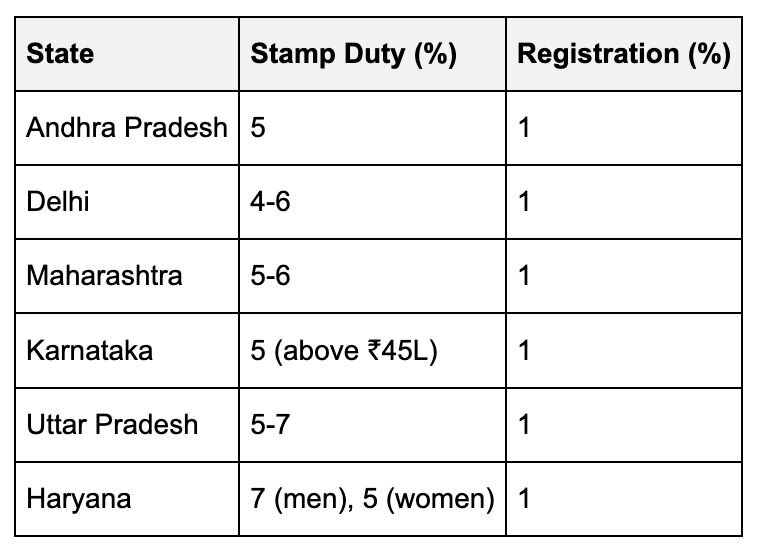
See detailed Uttarakhand rates for specific calculations.
Gather Required Details
Before you begin, make sure you have:
- Full names and identity details (PAN, Aadhar) of both buyer and seller.
- Property description including address and survey number.
- Consideration amount (the sale price).
- Agreement details if an earlier agreement to sell was executed.
Visit the Official E-Stamping Portal
E-stamping available in 26 states via SHCIL: Delhi, Maharashtra, Karnataka, Gujarat, UP, Uttarakhand, Tamil Nadu, etc. Access shcilestamp.com or state sites like igrsup.gov.in (UP). In most states, e-stamp sale deed generation is done through the SHCIL portal or state-specific e-stamp portal. You may need to register for an account if you do not already have one.
1. Select the Document Type and Enter Details
Once inside the portal:
- Choose “Sale Deed” as your document type.
- Enter buyer and seller information.
- Add property value that determines the stamp duty.
The system will automatically calculate the stamp duty based on what you enter. Rates vary by state and may depend on property value, gender concessions, or other factors under local laws.
2. Pay Stamp Duty Online
- Using Internet banking, credit/debit card, or other supported digital modes, pay the stamp duty amount.
- Verify E-Stamp: Go to shcilestamp.com/VerifyCertificate, enter UIN/date. Ensures no duplicates.
- After payment, you'll receive an e-stamp certificate with a unique identification number and QR code. Print this certificate.
For exchange deeds, see our e-stamp for exchange deeds guide.
3. Attach the E-Stamp to Your Sale Deed
Whether your sale deed is in physical or digital format, attach the printed e-stamp certificate to the document. This legally denotes that the stamp duty has been paid.
4. Proceed for Registration
With the e-stamped sale deed ready, both parties can present it at the local Sub-Registrar's office for registration. Along with the witnesses, you'll sign the sale deed here, completing the transfer process.
Registering the E-Stamped Sale Deed
Stamping alone does not complete the transaction. The next step is registration.
Registration Process
- Visit the Sub-Registrar's office where the property is located
- Carry the e-stamped sale deed
- Both buyer and seller must be present along with two witnesses
- Identity proofs and photographs are verified
- Registration fees are paid
Once registered, the document becomes a registered sale deed and ownership officially transfers to the buyer.
Important Aspects of the Sale Deed Form and Template
When preparing your sale deed form, it typically includes:
- Details of both parties.
- Description of the property.
- Sale consideration and payment details.
- Clauses regarding transfer of rights from seller to buyer.
- Witness signatures.
Key clauses in sale deed:
- Parties: Names, PAN, addresses.
- Property: Address, area, boundaries.
- Consideration: Sale price, payment mode.
- Title transfer: Seller warrants clear title.
- Possession handover date.
You can either draft this with the help of a legal professional or use a sale deed template downloaded from trusted sources and customise it as per your transaction. Many states also publish model sale deed formats to ensure consistency and compliance.
Download our free sale deed template. A well-prepared sale deed template will ensure you do not miss essential clauses and legal obligations.
Post-Registration Steps After Property Transfer
After the sale deed is registered:
- Apply for mutation in local municipal or revenue records
- Update electricity, water, and property tax records
- Preserve original registered deed safely
These steps ensure your ownership reflects across government databases.
Common Mistakes to Avoid While E-Stamping Sale Deeds
- Entering incorrect buyer or seller details
- Using outdated circle rates for stamp duty calculation
- Not verifying the e-stamp certificate authenticity
- Delaying registration after stamping
E-Stamp Validity? 6 months in most states (e.g. Maharashtra), unused can be refunded within 6 months via portal.
Stamp certificates typically have a validity period, depending on state rules. Delayed registration may require revalidation or additional fees.
Where ZoopSign Fits into the Property Documentation Journey?
Once your sale deed is drafted, e-stamped, and ready for execution, the next critical step is signing the document correctly and securely.
Platforms like ZoopSign, which specialise in digital contract execution, can be used to:
- Digitally sign supporting agreements related to property transactions
- Execute preliminary documents such as agreements to sell, declarations, or indemnity bonds
- Maintain a secure digital audit trail of executed documents
ZoopSign operates in compliance with the Information Technology Act, 2000, making e-signatures legally valid for many property-related documents, except where physical registration is mandatorily required by law.
In short, while the final sale deed for property must still be registered in person at the Sub-Registrar's office, digital execution platforms like ZoopSign can streamline the documentation that leads up to that final step.